Thursday, September 20, 2012

Part 4: On becoming a Marine Mammal Observer(MMO) and Passive Acoustic Monitor (PAM) operator

This is part 4 of my blog posts ‘On becoming an MMO/PAM operator’. If you've been organized, perserverant and/or lucky then you've been offered a contract and are packing your bags...but what about life at sea? This blogpost will provide some information about what life for an MMO/PAM operator is like offshore with a focus, this time, on life on a seismic vessel. So here goes…

What is the life of an MMO/PAM operator like offshore? THE SHIP

One of the biggest questions we have before departing for a contract is.... what will our home for the next few weeks will be like? Will it be spacious? Comfortable? Will you have your own cabin? Does it have many amenities for entertainment when you are off shift? Oh, and most importantly…how good is the food?

When it comes to seismic ships there can be a lot of variability in comfort and what amenities you’ll have so, as is much the case with this work, be flexible and keep your expectations minimal…this way you won’t be disappointed. I have worked on some very nice ships, some basic but still comfortable ships and, fortunately only a couple of times, some not so nice ships.

So, I'll start at the bottom of the list and describe what I'll call the VERY BASIC, the COMFORTABLE, and the BEST ships I've been on. Of course, how you rate life on these vessels is somewhat subjective and based on what you think is most important i.e. would you prefer to have a gym and pool or karaoke and access to movies and video games?


Hmmm...wouldn't want to end up on a ship like this ;)


THE VERY BASIC
If you’re not-so-lucky, you might end up on one of the very basic vessels. I've only been on a couple of these vessels. my very first offshore vessel was an older vessel and it seemed it was maintained for function rather than comfort. I also worked on another very similar vessel more recently.

Here are some of the finer points of life on my first seismic vessel: 

Space - I was in a shared cabin with one of the two other women on board; it was just a bit wider than the bunks, with just enough space to stand and change. if the two of us were in the cabin at the same time it was incredibly difficult to move around each other. we shared our bathroom (aka 'head') with the cabin on the other side of the head. we were pretty lucky though as only four of us were sharing that bathroom…the rest of the MMO crew shared a cabin of three and shared a head for six! 

Basic amenities - There were not many on board amenities (I honestly don't remember if there was a gym?) and the ‘lounge’ was a small room with a sofa, books and a tv with video games. despite this fact, we still managed to keep ourselves entertained while not on watch.   

Food - Besides the tight quarters the food was pretty good (fresh baked cookies at every coffee break!). yum!
Crew morale Unfortunately, the crew morale on this vessel was not very high…and I have to say, especially if you’re on a not so nice vessel, having a crew that works well together and can have fun can often more important than being on a fancy ship! 
Now, the vessel which will forever stand in my memory as the least comfortable vessel I've been on, was one I only worked on for three weeks. Much of the job we were off the ship either in the process of getting visas or in port for repairs (so buggered off to a hotel as quickly as possible :). Still, this time felt MUCH longer than three weeks!  
Here’s what made this vessel so memorably nasty to work on although, once again, many of the crew were fun so I’ll give it that! Additionally, when I worked on that vessel I had gone from the best I’d worked on (see THE BEST later) to this one, so maybe it just seemed really bad? Here is some info about life on this vessel:
  • Vessel size - The vessel was small…a mere 40 m and after working over a year on 100+ m vessels you notice this difference! Despite this, I always try to look on the bright side and I will say that one nice thing about working on this smaller vessel is that it was great for watching and photographing bow-riding dolphins, of which we had many while offshore Colombia. On the other hand when you’re only 7 m above the water you don’t see nearly as far so you’re much less likely to spot those distant sperm whale blows!


Tiny Ship of Order (or mostly disorder on this ship, ha ha!) Source


  • Cleanliness – this vessel was downright nasty when we joined in Panama. There were two accommodation decks with shared toilets and showers on each. The toilet was separate from the shower areas and, thankfully, we could lock the door to the shower but…yuck, let’s just say not clean! Fortunately, we took on Colombian nationals to work as deck hands and they were great for keeping things as clean as they could. As well, many of the crew didn't have the best hygiene practices which didn't help!


This is very true when working offshore!


  • Maintenance – I’m only going to mention the maintenance issue that most impacted me during my stay; regarding the cabin myself and the other woman on the crew shared. It can surely be said though that the rest of the vessel was in a similar state. First of all, from the first day we were in our cabin there was a steady water leak coming through the ceiling creating a nice soggy spot on the carpet below. After mentioning this to the captain and other crew they began an investigation to figure out where the leak was coming from. 
  • Despite the search it was not clear what was causing the leak but the magnitude of the problem soon became evident one afternoon shortly after we left port. On this particular afternoon my cabin mate was fast asleep (she was on night shifts) but suddenly, after dreaming of waterfalls, woke to water streaming down through the ceiling. She had to run out of the cabin and grab a garbage can to catch the downpour! After this very rude awakening the crew ripped the ceiling apart (although it was already falling apart from the constant dampness!) and for most of the rest of the trip we were graced with the view of a ceiling of rusty pipes and mouldy wood…probably would've been best to wear a respiratory mask in the cabin for the rest of the trip!


  • In addition to the soggy carpets, mouldy ceiling and rusty pipes we had issues with air-conditioning in our cabin and throughout the vessel. The Freon in the air-conditioning units was at useless levels and all the air filters were badly clogged up. The next time we were in port this problem was solved and we finally had a cool vessel; up until then it was incredibly stuffy inside the ship in the hot, humidity of Colombia!
  • The sewage stench! – This was the main reason my co-MMO and I affectionately dubbed this vessel “The Floating Turd", ha ha! In the words of my co-MMO “it floats like a turd, it rolls like a turd and it smells like a turd!”. Okay, that’s not the nicest nickname to give a vessel but it’s hard to say it wasn't deserving of this name given that from the bridge and the next deck down there was the nasty odour of sewage swirling and wafting around due to the sewage system backing up daily. Fortunately, we didn't have to stay inside on the bridge during our watches so we could escape this little bit of nastiness when we were in the fresh air on deck…but it was definitely not fun when we had to go onto the bridge for our hourly data recording and collection!  


  • The gym (or lack therof!) – Okay so there was a gym on this vessel but I have to admit I only used it once and this is because it was a barely functioning gym. The gym area was outside on deck and tucked forward and between one of the stacks and a cargo container storage area. The one time I did go for a workout I discovered the cross trainer wobbled, i.e. the handles moved as much to the side as back and forth, the stationary bike pedals couldn't move (rusted stuck), the free weights were covered in rust and the black foam handles crumbled and left black residue all over when you used them. By the time I finished my workout I was covered in sweat, rust and black from the foam handles! I can’t really complain though because I had spotted a group of bottlenose dolphins swimming by us during my cross trainer session!
     Here are some photos from these lovely vessels :)

One of the more basic vessels I have worked on...not too fancy but it did the job 


This vessel had a purpose-built 17 m high MMO tower with Big Eyes binoculars mounted on each end and a little 'office' in the middle - not bad for conducting watches

Our 'office' with direct phone line to the instrument room for communication with the seismic crew


The galley - basic but cozy and the food was pretty good (yummy fresh baked cookies daily!)

Another very basic vessel I have worked on


You can see the 'gym' on deck, guess I couldn't really complain...at least there was something!

Then one of the freezers broke down...and we had to eat as much ice cream as we could before it all melted in the tropical heat, ha ha!

The passageway on the first deck leading to our cabin down the hall and the galley to the right

The cozy galley (which also served as the lounge area)


**apologies for the messed up formatting in the following in this post...I'm working on trying to fix it. For some reason Blogger has turned all my text into caps and I'm having trouble changing it back without having to re-write the entire thing again. Hopefully this will be repaired soon!

Now you have learned of the worse of the worse from my experience but I have heard about some of the other 'very basic' ships including a Chinese vessel I was supposed to work on, until some visa issues arose, this past year. I had friends who worked on that vessel warning me of what to expect and, in hindsight, it’s probably a good thing we had those visa issues!


So, just so you know what other delightful vessels might await you ;), the highlights of this vessel included:
Language - The vessel was operated entirely by Chinese crew who spoke almost no English. This made it quite difficult for MMOs to communicate necessary mitigation information to the crew.
Outside communications - Well, there was internet, which is usually available but somewhat slow offshore, but it was clear that only limited websites were available on this vessel. Apparently, it was difficult to get much access to current world news and some other websites. It was a Chinese vessel, and as you might well be aware, there is extensive internet censorship in China.
Food - Apparently, the food on this particular vessel consisted only of rice and greasy meat (not good for a mostly veggie person!) and almost no fresh fruit and vegetables. Just prior to my planned departure I bought freeze dried fruit and camping food, multi-vitamins and protein shakes to help supplement my diet out there.
Smoking - There was smoking INSIDE many areas of the vessel, i.e. in the bridge, and not in a designated smoking lounge or deck area. The smell and stuffiness that arises from smoking inside on land is bad enough...but take it offshore on a small rolling vessel and this sounds like the perfect recipe for seasickness ...not to mention the lousy diet to top it off!
  • Gym - No gym or really anywhere else to get any physical exercise! Aaagh! If you don't normally go to the gym on land you quickly learn to appreciate a gym on a ship where there are rarely other ways to get any form of physical exercise. If you're lucky and you have access to a heli-deck it is typically the only place you can really go for a good walk or jog and get a stretch in the fresh air. 


THE COMFORTABLE 
It is safest to assume you are going to be on a basic but COMFORTABLE vessel on most jobs. They aren't fancy but they have all the amenities you could want while working offshore. The vessels I've worked on that fall into this category include the HarrierExplorer (in the Gulf Of Mexico), OspreyExplorer (Mozambique) and the Artemis Angler (Angola). 


The Harrier Explorer (Source)

The Osprey Explorer (Source)

The Artemis Angler (Source)


So, what made these ships basic but comfortable? They had many of the amenities the BEST vessels 
have (see following) but they aren't as new or quite as fancy (many are converted fishing or supply vessels):
  • Space - On these vessels it’s still very likely you’ll be sharing a cabin although I have been lucky enough to get my own cabin on occasion. The most important factors on whether or not you’ll get your cabin is how many crew are on board, how many women and men (they won’t, or shouldn’t!, mix the two), and what working schedules crew have. For example, I have spent time working in regions with a risk for piracy and there will be additional crew in the form of private security and local military. That being said I have usually been quite lucky sharing with cabin mates and we have managed to make it work. It’s amazing how we adapt to the situations we are in. Plus, when you get home you realize just how amazing the space you have at home is!
  • Lounges - These vessels have lounges but these are typically smaller than those found on the nicer vessels with no or few games, musical instruments or other entertainment besides a large TV. Despite this you can still have a great time doing movie nights with fellow crew.
  • Food - Typically, the food is still very good on these vessels. The galley will be smaller but then, as they also tend to have fewer crew on board, there is still plenty of space. If anything, having a cozier galley is better for conversation among crew members during meal time. Yes, amazingly enough I have been on vessels with very little conversation during meals! I was on one vessel with 35 Russians and a few Americans and Canadians (the Party Chief, other MMO and myself). Although the Russians always politely said ‘Good Appetite’ to everybody when they walked in the galley, they did not speak at all while they were eating together; instead they looked down at their food busily shoveling it into their mouths.
  • Gym - Most of these vessels had a gym which was functional but usually fairly small. Once you get past the small size of the gym though (you often can’t really have more than one, maybe two people, working out at once) it worked well. In the end you will just be happy there was a gym!

Here are a few photos from these vessels:

The cabin on the Harrier Explorer was actually quite large. It was a 2 person cabin (you're only seeing half the cabin here) but I had it to myself most of the time :)


Hard at work on watch...actually I was on my break doing a bit of extra work while lazing on the sun lounger :)

 My co-MMO on watch on the heli-deck in the hot sun of the Gulf of Mexico 

Approaching the Artemis Angler...my home for the next 10 weeks!

My office on the Artemis Angler heli-deck. The 360 degree, nearly unobstructed view was amazing for spotting wildlife!

Our data entry office (in the radio room) on the Artemis Angler

The bridge of the Artemis Angler

The cute and cozy galley of the Artemis Angler


The gym in the Artemis Angler


THE BEST (I have been on!)
I was very fortunate to spend over over a year working on three sister ship’s, all Fugro (now CGG) vessels, which were quite fancy and made life at sea very comfortable indeed :) These ships included:  the GeoCaribbean (I spent two rotations offshore Mozambique), Geo Celtic (one rotation off Kenya and another off Mozambique) and the GeoCoral (one rotation off Kenya). 

Additionally, I worked on a PGS vessel, the RamformValiant (two rotations offshore Egypt) and a Dolphin Geophysical vessel, the Polar Duke, (two rotations offshore Tanzania). Although these ships were just a shade less fancy than the Fugro vessels, they were incredibly comfortable and the food was great! So, what made these vessels stand out to me? 

Here’s what these vessels had for amenities:
  • Private cabins - I had my own cabin on each of these vessels. On the Geo Coral my cabin was very large and included a bed, a couch, a TV and DVD player, wifi and access to the ship’s server with loads of movies and TV shows
  • Lounges - Two very comfortable lounges (one was an enclosed smoking lounge) with TVs, karaoke...and, yes, I had a couple fun Karaoke nights with the Filipino crew!

  • Gym - A huge gym with a spinning room (multiple spinning bikes with a large screen TV to watch spinning videos, two treadmills and a cross trainer), rowing machines and weight equipment. Also, because the gym was large enough, the medic and some of our security conducted boot camps, jiu jitsu/grappling and Aikido classes…a wonderful added bonus when working offshore!
  • Saunas! - A men’s and women’s sauna in the gym area. There's nothing like a nice sauna after a good workout!
  • A swimming pool on deck! - Now this was not a huge swimming pool but it was large enough to cool down after a workout or an MMO watch on deck in the hot African heat or to play a  game of volleyball.
  • Basketball - There was a basketball hoop set up on deck next to the pool (although I must confess I only took advantage of this a couple times). Be careful not to accidentally lose the ball over the side :D
  • Games - Darts, fussball and table tennis. On one of the vessels we had a ship wide competition; the crew split into teams and competed until we got down to the best in all three games. This was great way to bring the crew together to socialize after shifts.

  • Cinema and conference rooms - There were comfortable conference rooms and a large cinema room which spanned two decks in height.
  • Art - On the Fugro vessels beautiful art adorned the passageways, galley and lounges. Many of the other vessels also have art prints displayed throughout.
  • Food - These vessels had nice big galleys with many different food options and lots of fresh fruit and veg (an important thing when offshore!). As well, although I don't usually mention it to the galley crew, I usually eat vegetarian with the occasional fish. When the galley crew found out I was mostly vegetarian they went out of their way to be sure I had a good vegetarian option with each meal. On most vessels our Saturday night meals were delicious (usually steak and prawns and lots of other tasty options). One Saturday on the Ramform Valiant I counted 23 different desserts- pastries, ice cream and candies. Delicious! This is when you need that gym onboard ;)
  • In addition to these amenities the working areas were very comfortable and spacious and we could conduct our watches without feeling like we were in the way of the marine or seismic crew.


Here are some photos from around these very comfortable vessels:


 Ramform Valiant in Malta...where we spent a week before transiting to Egypt

Conducting my PAM watch on the Geo Caribbean

The coffee and office area on the bridge of the Geo Caribbean

View of the bridge from the bow of the Geo Caribbean


Artwork on (and of) the Geo Caribbean

On the bridge of the Geo Celtic

View from the starboard bridge wing of the Geo Celtic

Getting the PAM ready for deployment on the Geo Celtic


The Geo Coral

 BBQ time on the Geo Coral (with the pool, drained for cleaning, to the right)

  The sauna on the Geo Coral :)

   The spinning room on the Geo Coral 

    The rest of the gym on the Geo Coral

   My very spacious cabin on the Geo Coral

   Another one of my favourite things on the Geo Coral...the swimming pool! And to make it even better it had a killer whale painted on the bottom!

The crew meeting room and cinema on the Geo Coral

The Polar Duke (Source)

The galley on the Polar Duke

Our shared cabin on the Polar Duke

The starboard lounge on the Polar Duke

The port lounge on the Polar Duke 

The gym on the Polar Duke 

On the bridge of the Polar Duke in the evening 

Like I said, the food is one of the most important things...like this wonderful Christmas dinner on the Polar Duke 


I think you now have a pretty good idea of what to expect of life on a seismic vessel…now what about those people you will be working with? Who are the rest of the crew and what will they be doing on the vessel? Read my next blog post to learn more about the crew you’ll be working with...Next time:


6)What is life for an MMO/PAM operator like offshore? 
The people you'll be working with -THE CREW :) 


Wednesday, September 19, 2012

Part 3: On becoming a Marine Mammal Observer (MMO) and Passive Acoustic Monitor (PAM) operator

Success comes from curiosity, concentration, perserverance and self-criticsim
-Albert Enstein


Here's part 3 of my blog posts 'On becoming an MMO/PAM operator'. Now that you have your offshore survival certifications, your medical and your MMO/PSO/PAM certificates…how about getting the work! 

A lot of people think once they have all their certifications they'll be headed offshore and working right away...but it's not necessarily that easy and takes some time and luck to get your first contract. So here's some tips and my answers to question 4 based on my experience:

4) How do you get a contract and how does working as a freelance MMO work? 

WORKING FREELANCE vs WORKING FOR ONE COMPANY
Most MMOs are freelance consultants meaning they don’t work for a single company but are sent on contract jobs by oil and gas or environmental consulting personnel companies. Occasionally, some companies hire MMOs as full time employees but these jobs are more difficult to come by. That being said, if a personnel company likes you there's a good chance they will send you on contracts on a regular basis. I have been fortunate enough to work consistently for some good companies over the last few years.

If you are hired full time with one company you have the benefit of regular work even when you're not offshore; these companies will hire MMOs to do the field work as needed and then office based work, such as data analyses and report writing, when they're not in the field.  As I said previously, this does not happen as often and this type of employment can be hard to find (and competitive!). As well, these companies will give priority to those living locally, so, depending on where you live or whether you are willing to relocate, this might not be an option available to you.


The benefit of working freelance is that you'll have more choice on where you work (lots of international travel if you like it!), you'll likely make a higher day rate when you do work, and you'll have lots of flexibility with scheduling (choose when you do or do not work!). Of course, keep in mind that you will have to be more flexible and prepared as a freelance contractor...be willing and ready to hop on a plane at any minute. 

Since the nature of freelance work is changeable your friends and family are going to have to be flexible and accepting that this is how the work is and it can be difficult to make plans far down the road i.e. those winter holidays in Mexico! This can be a downside to the job but we do the job because we love it and that's what makes up for it: international travel (occasionally in business class if you're lucky!), meeting and working with people from different cultures, implementing important mitigation measures to  minimize impacts to marine wildlife, collecting data in regions which often have little or no offshore data collection, the opportunity to teach and inspire the vessel`s crew and clients about these animals...and the opportunity to observe species you haven't seen before!


COMPETITION
Once you have your certifications in order it might sound easy to get a job but, like many other fields, there is competition. Especially in this field…LOTS of people want a job travelling the world looking at whales and dolphins! It can be especially difficult to secure your first contract (you don't have the experience yet!) and I would strongly recommend you budget and plan for it to take six months to a year to get your first contract. 


Of course, this all depends on the season you are entering the job market (fewer jobs in the northern hemisphere winter), your location (priority is often given to those closer to the job), your previous experience in the field and just plain luck. One of the best ways to get into the field is when a company is hiring MMOs for a big job...my first seismic job required 12 MMOs per five week rotation (3 on each of the 4 vessels) over the 7 months of the project. It was a great entry level contract as the new MMOs were mixed in with the more experienced MMOs resulting in a perfect training opportunity!

PERSONNEL COMPANIES
As I mentioned above, freelance MMO/PAM operators are usually hired through personnel companies. When you complete your training most MMO/PSO courses provide a list of personnel companies at the end of the course. This is a good place to start looking for the work; contact these companies with a copy of your CV and inform them of your availability. If they are interested they will either move ahead with the process of sending you on a job (and you’re lucky!) or, if they have nothing suitable at that time, they'll probably add you to their files for future contracts. Along with your CV they will normally ask you to send scans of your offshore survival certifications, MMO/PSO/PAM certifications, medical and other relevant paperwork.

BE CREATIVE! 
I would also recommend you get creative with the job search! Don’t just send your CV to the companies on the list you’re provided during your course because (just think about it!) everybody who’s taking the course with you (and before and after you!) will be sending their CVs to those companies too. Get creative and do further research for companies who might hire MMOs. Use Google to search for anybody who you can send your CV to. Join LinkdIn and the Oil and Gas and other related industry groups…the more companies with your CV the more likely you will get some work!


So those are my main tips regarding getting a job as an MMO/PAM monitor. If you are still reading this blogpost you are obviously still interested in pursuing this line of work! Once again, I would like to emphasize the importance of recognizing you are considering going into a competitive and professional field; it might sound nice to have a job sitting on deck looking at whales and dolphins and turtles all day but I still want you to keep in mind the following about the work we do:

WORKING ALONE
You are usually by yourself or working with one other MMO (typically on opposite watches to you) on an industrial offshore vessel (or platform). Although most of the crew are quite welcoming to MMOs, you are your own entity on the vessel often surrounded by people who don't really get why we are there. That is...why would we want to stare at the water for hours for that one fleeting observation of a distant blow or a brief sighting of some bowriding dolphins? I've had times when I burst into the bridge with excitement about a marine mammal, shark or bird sighting and the crew just looked at me blankly. 

Of course, often the crew will be intrigued by your enthusiasm which can translate in their increased interest in the animals and this can be helpful to you if it means they will help you spot or track the animals later. If they can confirm sightings their observations can support your decision if you need to request a delay or shut down.

BOREDOM AND EXPOSURE
Watches can be long, lonely, hot, cold, wet and boring and it is important you can remain focussed on the task at hand during the, often long, periods you will not be seeing a marine mammal or sea turtle. During one of my first jobs, in the Gulf of Mexico, we had 35 days without seeing a single marine mammal. There were three of us on that job, all quite experienced in marine mammal work, and we started to wonder if we were blind! The simple truth is sometimes the animals just aren't there and keep in mind  there can be long periods without sightings.  


For some of us though (and it should be most of us!), it is the brief but rare and interesting sightings that drive us to keep us going. My heart still races when I see a distant blow or a group of dolphins porpoising towards us from the distance!

MITIGATING
If you have to request mitigation…it can be a difficult! You are making a decision that can cost a company a significant amount of time and money and often your decision is based on an observation that nobody else saw, so you have to be confident (this is when it helps to take photos or when other crew members see the animals too!). 

Something that surprise me when I first started this work was how many different interpretations of the mitigating guidelines there are out there and this can occur among MMOs and between MMOs and the clients/crew of the vessels. Fortunately, work is being done both by the legislating organizations and within the MMO community to to address these issues and ensure the mitigation rules are clearer. For this reason it is important, even when you have completed your certifications, to keep track of updates on the guidelines for the areas you work in.

A great source of guidance for interpreting and applying the guidelines is the Marine Mammal Observer Assocation (MMOA). I recommend, once you have the right experience, joining the Marine Mammal Observer Association. The MMOA has wealth of information about our work and the forum is a great place to ask your questions and see what issues other members have come across. To access most of the information you have to be a full member and to become a  full member you’ll need some experience (6 months offshore) and be willing to follow the mission and aims of the association). Until you can become a full member you can join as an associate member. 


Finally, talk and work together with other MMOs...it is especially important to interpret the guidelines consistently when you are working on the same vessel or job together. I have heard stories of MMOs, on the same vessel, interpreting and implementing mitigation guidelines in different ways. This would be incredibly frustrating for the seismic crew and make you look unprofessional. Make sure you and whoever you work with have the same understanding of the rules! 

I think most of us will agree we want good MMOs working out there so bounce your ideas and thoughts off other MMOs and we can all help each other do a better job so all MMO/PAM operators maintain professional standards! 

That's it for this blog post...next time:

5)What is life for an MMO/PAM operator like offshore?


Sunday, September 9, 2012

Part 2: On becoming a Marine Mammal Observer (MMO) and Passive Acoustic Monitor (PAM) operator


Hello again! This is the second blog post, with questions 2 and 3, to answer queries I've had about how to become an MMO/PAM operator. In the previous post I provided some information regarding what type of background, education and experience I think would be helpful to become an MMO/PAM for offshore industrial (and other!) projects. In this post I will address the safety training that is required to work in the offshore environment and what additional mitigation training is required to work as an MMO/PAM operator. 

So, getting straight to the point...here are my responses to questions 2 and 3: 


2) What safety training is required for this work?
  • Depending on where you work you will probably need BOSIET and HUET certifications or some equivalent. BOSIET is the Basic Offshore Induction and Emergency Training course and usually incorporates the HUET (Helicopter Underwater Escape Training). You will also need to get an offshore medical exam, which must be renewed every two years, and proves you are physically fit to work in the offshore environment.


  • BOSIET - This course introduces you to the dangers of the offshore environment and includes sections on sea survival (life jackets, life rafts etc), fire fighting and first aid.
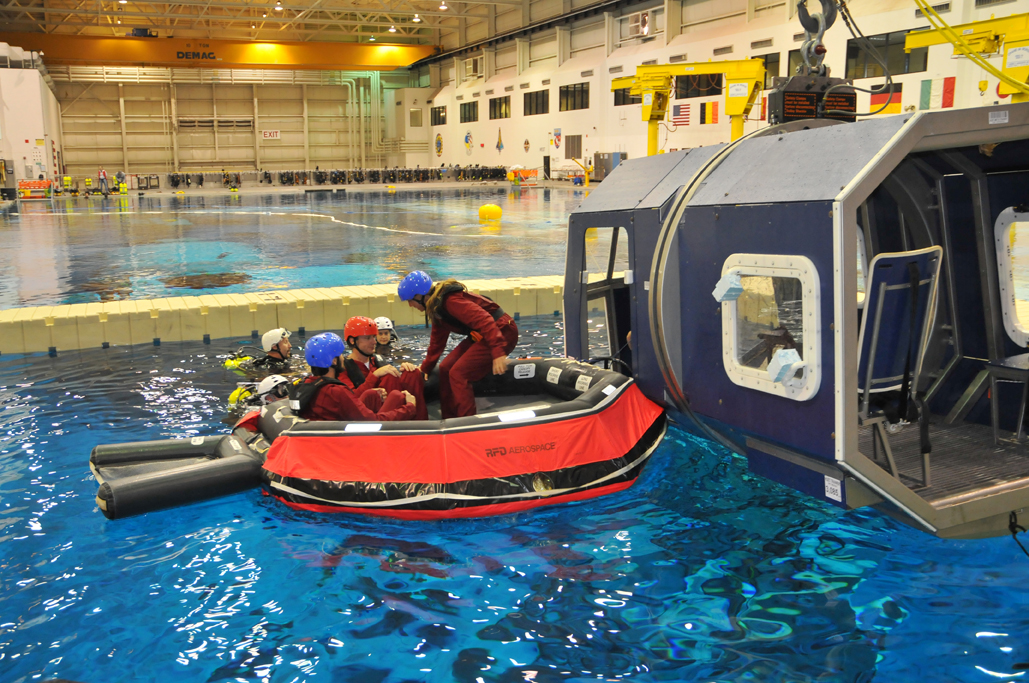
  • HUET - This course is usually included in the BOSIET course. You are trained in helicopter safety and escape because for many jobs crew are a taken to/from the ship by helicopter. The course is conducted in a pool using a model helicopter trainer. You are buckled in the trainer, immersed underwater and must demonstrate the necessary underwater escape skills...even after the helicopter has flipped over!


The helicopter trainer used for HUET courses which just started this year at the Johnson Space Centre, Houston


  • OFFSHORE MEDICAL - This can often be done at the same location as the BOSIET and HUET training but in some places i.e. where I live in Canada, there are only certain places which can provide this certificate. The last time I did this I spent 500$ in one day... 125$ in flights to Vancouver and 375$ to get the medical done!
  • OTHER SAFETY TRAINING - Depending on where you work you might need other safety certifications. For example additional training is required in some countries. 
  • FOET - Once you have your BOSIET you will have to re-certify every four years; this course is called the Further Offshore Emergency Training and only takes one day to complete. The course refreshes you on your HUET, sea survival, fire fighting and first aid. I recently took this renewal course...and was lucky enough to do so at the Johnson Space Centre in Houston! We conducted our pool techniques in the same pool,  which contains a life size replica of the Space Station, the astronauts work in ...very cool!


Happy me...after completing the FOET course at NASA's Johnson Space Center


3) What training for marine mammal and sea turtle mitigation is required?

  • JNCC MARINE MAMMAL OBSERVER (MMO) This certification is required for any MMOs wishing to work in UK continental shelf waters but is regularly used (often with amendments) in regions around the world without their own guidelines. More information on the courses that are available can be found here and this website provides some more info on what you will learn in the course. 


  • PROTECTED SPECIES OBSERVER (PSO) – To work as an MMO in the Gulf of Mexico you are required to have this certification. This certification can be obtained in a day (often alongside the JNCC MMO certification). More info on PSO courses can be found here.
  • OTHER CERTIFICATIONS – As a start I would recommend getting the above mentioned certifications but, depending on where in the world you are working, you may be required to obtain other certifications specific to the region/country’s legislation, i.e. Canada, New Zealand, Australia, and Brazil have their own set of guidelines.
  • PASSIVE ACOUSTIC MONITOR – In addition to conducting visual observations for marine mammals MMOs are also often certified as PAM operators. PAM systems are used to acoustically detect marine mammals during periods of low visibility i.e. at night, in fog, or in conjunction with visual observations to aid in detection. 


A typical PAM cable deployment and equipment setup on a seismic survey vessel


Conducting a PAM watch...listening for whales and dolphins :)


So that's it for the questions in this post. Once again, I hope you found it useful and if you have any questions or comments feel free to contact me or post! 

Next time I will provide some info on how to get the job once you have all those certifications: 

How do you get a contract and how does working as a freelance MMO work? 

Part 1: On becoming a Marine Mammal Observer (MMO) and Passive Acoustic Monitor (PAM) operator

My responses to some frequently asked questions about getting started as an Marine Mammal Observer (MMO) and Passive Acoustic Monitor (PAM)


Okay, so the following blog posts are going to be much wordier than previous posts… but they should, hopefully, be packed with some useful information! Recently, I have received many emails from people interested in either changing careers to become an MMO/PAM operator or are just starting out in the fields of biology or environmental sciences and see this as potentially a great job...which it is! I decided that, to save me writing the same things over and over in emails to multiple people, it would be a good idea to write a post with suggestions about how to get into MMO/PAM work. 


We don't always get to use binos like these!


To be honest, having worked 3 years in this field I still consider myself new and it's a field which is itself still developing! I still learn something new every time I go on a job. I think this is one of the most important things to keep in mind if you want to do this work...be willing to continually learn and grow! Learn from books, your observations, other MMO and PAM operators and seismic crew. Yes, the seismic crew can be very informative or interested about what's going on out there...many of them are themselves avid surfers, divers and travelers who also enjoy the marine environment! 


Some crew can be more fun to work with than others ;)

First of all, as somebody who has been involved in marine mammals since 1996 in eco-tourism, research and now in the offshore oil and gas industry, I would like to say, in my humble opinion, that becoming an MMO requires more than sitting in a 1 or 2 or even 5 day course. To work as an MMO, if you truly want to be an effective MMO, requires experience observing the animals, diplomacy and an ability to work with the crew, an understanding of the seismic (or other) operations and this all takes time, effort and patience. Anybody can sit in a course and get certified as an MMO but to truly become an effective MMO, and do the job well, requires much more. For example, ask the crew how the equipment works...it'll make you a better MMO because you'll understand what they're doing when and why and the crew will appreciate that you're not just there to sit on your butt in the sun and stare at water!


Here are the guys who can help us do our job...important to communicate with them and understand their job too!


So I have written some responses, based on my personal experience, to some of the most frequently asked questions I have received regarding starting out as an MMO/PAM operator...and here it is question 1:

1) What type of background i.e. experience and education, do you need to work offshore as an MMO/PAM operator?

EXPERIENCE OBSERVING MARINE MAMMALS, SEA TURTLES AND SEA BIRDS 
  • First and foremost you should have some experience observing marine mammals, sea turtles and even sea birds in the wild. This experience could come from previous work on whale watching vessels or volunteer work with research or conservation organizations. 
  • Most of the time, due to distances to sightings, MMOs observe animals through binoculars and correct species identification (or recognizing you can’t identify them to species level!), under these conditions, is an important part of our job. This is especially important in locations where you can request delays or shut downs of the sound source for some species but not others. You wouldn't want to make the mistake of requesting a shut down for a non-shut down species, would you? This would be an expensive mistake to make and you would not be very popular on the vessel if this happened. 

In addition to gaining experience observing marine mammals while working in whale watching or volunteering on a research project you might also be lucky enough to work with people who have decades of experience watching these animals...and these are the guys who can pass on what they know to help you be a better offshore observer!


A DEGREE IN A RELATED FIELD
  • It is definitely to your advantage to have at least an undergraduate degree in a related field i.e. biology, marine or environmental sciences. Having a higher level degree, such as a masters or PhD, although not crucial, could be even more advantageous especially when there is a limited job market. The data we collect is fairly basic compared to that collected during marine mammal field research but it is important that you can collect it in the right manner and understand the importance of data collection protocols and good report writing skills. 
  • In some locations, i.e. the UK, the data is sent to a central organization and is checked and compiled in a database to be used for further analyses. If this data is not recorded in the right manner it will be rejected for these analyses...a disappointing waste of potentially valuable data.  That being said, a person without a PhD but years of field experience might get priority for a job over somebody with little observation experience but a PhD. 

EXPERIENCE WORKING AND LIVING OFFSHORE 
  • while this is not a requirement it would be helpful to approach this job knowing you can handle living offshore in a variety of conditions, on a variety of vessels (some very nice, some not so nice) with crews of mixed nationality and background. You wouldn't want to make the ~2000$ investment in certifications and training only to find out you get deathly seasick or can't stand living in tight quarters for weeks on end, would you? 


Do you get seasick? Keep in mind this is a reality of offshore life...especially on the smaller vessels!


EXPERIENCE WITH INTERNATIONAL TRAVEL 
  • Again this is definitely not a requirement but it is helpful to know you can handle multiple days of travel to and from the vessel (It took me 5 days to get to the ship on a job off Mozambique last year!).

  • Oh and the fun to be had when flights are delayed or cancelled, flight connections are missed, baggage is lost etc! You need to be able to remain calm in these situations, communicate with the contracting companies to adjust travel plans and do all this when you're very tired and want to go curl up in a corner and sleep!
  • Then there’s the jet lag...another important consideration. How comfortable would you be traveling for five days to a fairly remote location, 9 hours ahead of your home time, only to arrive at the vessel, have to hit the back deck to set up the PAM gear, sleep for three hours and then receive a call from the crew that they want to start operations...and get out of bed, despite the jet lag and lack of sleep, and work another 8 hours?


So...those are my reponses to Question 1. For the other experienced MMOs out there I'd love to hear what you might want to add, from your experiences, in response to my personal comments. 


Thanks for reading and I hope this first blog post will answer some of the questions you might have while thinking about becoming an MMO :)

See next post for the following questions:


2) What safety training is required for this work?
3) What training for marine mammal and sea turtle mitigation is required?