Showing posts with label nature photography. Show all posts

Thursday, November 14, 2013

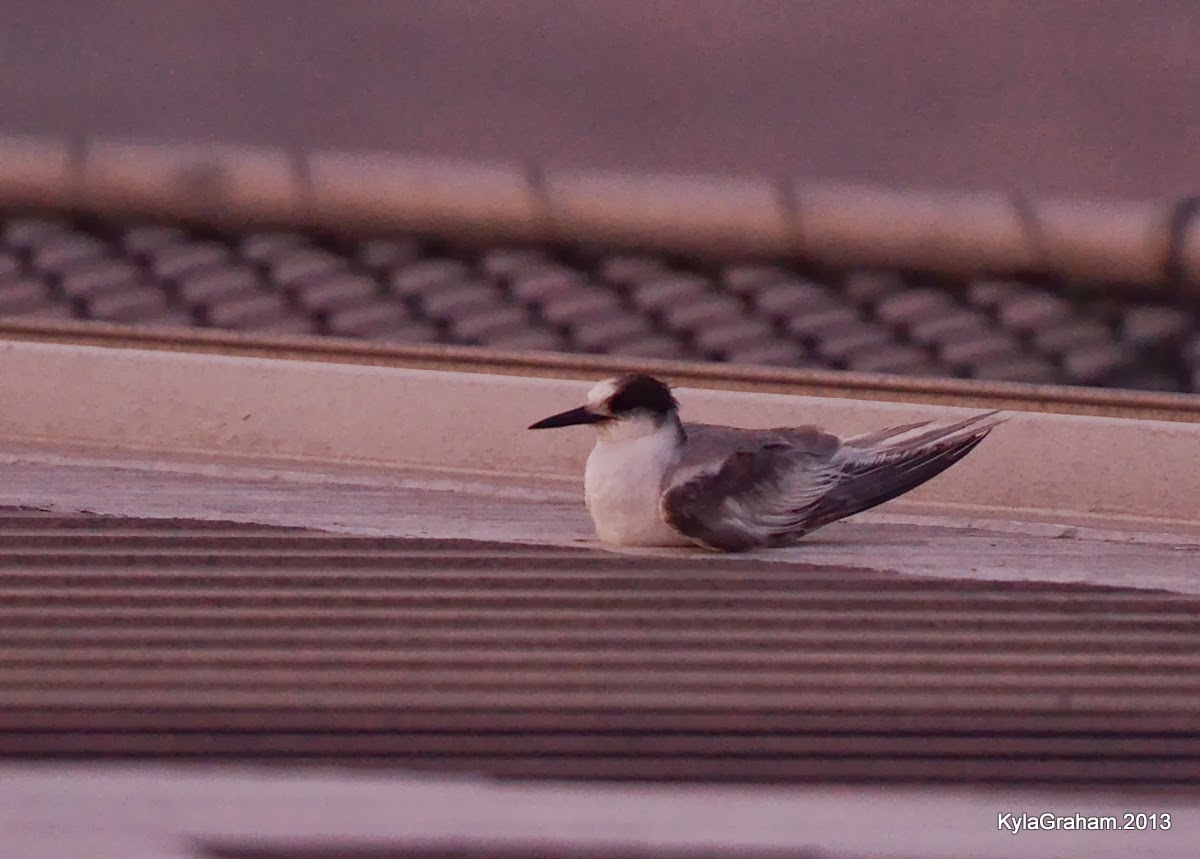
November 14, 2013: Resting Tern

365 Project, Day 115
Here is my day 115 submission to my 365Project:

Today was my first full day back on my marine mammal observer (MMO) watches offshore Angola. I was working out here on this same job from late June until the end of August when we were incredibly busy with sightings, especially of humpback whales (Megaptera novaeangliae, see my posts from July/August), but I didn't expect I'd be coming back. Well, it ends up the job got extended so I'm back and ready to discover what marine wildlife I will see this time of the year. 

It will be different this rotation this time; the humpback whales have mostly left the area to return to their summer feeding grounds in Antarctica. Already, I have learned from the MMOs who have been here since I left that the humpback whale sightings have declined and it is much quieter in general on the marine mammal side of things. This is good in the sense that it means there will be fewer marine mammals around during the vessel's airgun operations. Plus, we will have our avian friends around and I still have a lot to learn about these species so I am looking forward to discovering what will be around the area in November and December. 

This evening was my first good bird sighting. I was finishing my last watch at sunset when a common tern (Sterna hirundo) flew in and landed near me on the helideck. It must've been tired and needing a rest as it was fairly tolerant of my presence and, despite the decreasing light and the need to boost the ISO in camera, I was able to creep fairly close and snap some good shots. 


Fun fact of the day:
Common terns have a circumpolar distribution breeding in most of Europe, Asia and North America except in the extreme north and south. In Africa it winters south along the coast. 

Read more about the common tern at this BirdLife International webpage.

Here are some more photos of this lovely little guy:


I also got some great video but, unfortunately, the ship's internet is too slow to upload it...maybe later :)

Wednesday, November 13, 2013

November 13, 2013: White-fronted Bee Eater

365 Project, Day 114
Here is my day 114 submission to my 365Project:

This morning was the last morning at Camp Malongo, in Cabinda Province, Angola, I had to do some last exploration of the local wildlife. I only went out for a brief excursion around this morning as I had to return to my accommodation to pack and then be ready to head to the heliport for our flight to the ship. 

Although I didn't wander around as long today I was happy I went for one final walk and still had some nice observations including: a great sighting of a pair of white-fronted bee eaters (Merops bullockoides), more village (black headed) weavers (Ploceus cucullatus), a monkey skull, a hadeda Ibis (Bostrychia hagedash), a possible African thrush (I'm not 100% sure that's what it was, Turdus pelios), a piping (white tailed) hornbill (Bycanistes fistulator), a northern grey-headed sparrow (Passer griseus) and some Bronze Mannikins (Lonchura cuculluta). Not bad for a shorter morning venture :)


White-fronted bee eater (Merops bullockoides) 
Fun fact of the day:
White-fronted bee eaters dig holes in cliffs or banks of earth where they nest in small colonies. The family groups making up these colonies are known as "clans" and they are known to exhibit cooperative breeding with non-breeding individuals helping relatives raise their brood. 

To read more interesting facts about white fronted bee eaters check out this Avianweb.com webpage. 

Here are the rest of the photos from this morning's adventure:

White-fronted bee eater (Merops bullockoides) 

White-fronted bee eaters (Merops bullockoides) hanging out near one of the tracks going around camp

White-fronted bee eater (Merops bullockoides) on a traffic cone of all things :) 

White-fronted bee eater (Merops bullockoides)...take off! 

White-fronted bee eater (Merops bullockoides) doing some aerial hunting

White-fronted bee eater (Merops bullockoides)...another take off! 

female village (black headed) weaver (Ploceus cucullatus)

Yesterday I found this monkey skull on the ground around camp...I had considered taking it to the ship with me (ha ha!) but decided against it. I did go back and snap this photo today though :)

Hadeda Ibis (Bostrychia hagedash) 

I believe this is an African thrush (Turdus pelios)?

Piping (white tailed) hornbill (Bycanistes fistulator)

Northern grey-headed sparrow (Passer griseus)
Village (dark headed) weaver (Ploceus cucullatus) 
Bronze Mannikin (Lonchura cuculluta)

This little bronze mannikin (Lonchura cuculluta) was fun to watch as it seemed to be struggling to get this piece of grass 

bronze mannikins (Lonchura cuculluta) getting close

I also took some photos from around Camp Malongo and am including them here so you have a better idea what this place is like. Oh and excuse the blurriness in some as most of these were taken with my iPhone :)  

Views around from the office we visited to go online

Views around from the office we visited to go online

Views around from the office we visited to go online...busy place, ha ha!

View of the trees where the straw coloured fruit bats (Eidolon helvum) live


The room I stayed in overlooked the tennis and squash courts with the heliport on the other side

Views from my accommodation building

The field adjoining the forest where I saw the Sitatunga (Tregaluphus spekii) most mornings

While wandering around the other day we came across this cliff with good views beyond the camp


Monday, November 11, 2013

November 11, 2013: Itchy Monkey Foot

365 Project, Day 112
Here is my day 112 submission to my 365Project:

It is day two for me at Camp Malongo in Cabinda Province, Angola. I am here for a few days until I fly out to the ship by helicopter on Wednesday. Since there's not a lot else to do here I am taking advantage of my last time on shore (and in Africa!) to enjoy the terrestrial wildlife before I go offshore for 6 or more weeks. 

I heard there were monkeys around the camp and, sure enough, when I returned from my morning walk this morning I saw a group of what turned out to be vervet monkeys (Chlorocebus pygerythrus) just outside my accommodation. Vervet monkey males have bright blue balls which is a distinct feature you can use to identify them (see photos following). 

I just can't get enough of watching animals in action interacting with each other and their environment. In the end, although I got many fun shots today, I really enjoyed the photo of this monkey scratching it's foot. :)

Itchy monkey foot!

Fun fact of the day:
Vervet monkeys are primarily frugivous (fruit eating) but will supplement their diets with insects. 

Read more about vervet monkeys at these links:


It seems these sitatungas (Tragelaphus spekii) tend to keep near the forest edge in camp...this is the second day I've seen them in roughly the same location. This one is a female which you can tell by her stripes.

Butterfly and morning dew

White-fronted bee eater (Merops bullockoides)

White-fronted bee eaters (Merops bullockoides)

This beautiful yellow flower was growing along the ground along the side of one of the camp roadways

I believe this is a Little grey greenbul (Bulbul gracile)...if you think otherwise do let me know!

Probable Little grey greenbul (Bulbul gracile) 

This was quite a scruffy looking White-fronted bee eater! (Merops bullockoides)

White-fronted bee eater (Merops bullockoides)

White-fronted bee eater (Merops bullockoides)

White-fronted bee eater! (Merops bullockoides)
It might not look like much in this photo but this is a large butterfly one of the White-fronted bee eaters (Merops bullockoides) caught!

Blue breasted cordon-bleu waxbill (Uraeginthus angolensis)

Blue breasted cordon-bleu waxbill (Uraeginthus angolensis)


Blue breasted cordon-bleu waxbill (Uraeginthus angolensis)

Blue breasted cordon-bleu waxbill (Uraeginthus angolensis)


Probable female green-throated sunbird (Chalcomitra rubescens)

Village (dark headed) weaver (Ploceus cucullatus)

Village (dark headed) weaver (Ploceus cucullatus)

You can tell this male is a vervet monkey (Chlorocebus pygerythrus) because of his bright balls


I wasn't sure what these guys were eating...possibly garbage they raided from the camp or, as I discovered later, mangoes from a large mango tree I later saw had clearly been raided by monkeys


Striped Kingfisher (Halcyon chelicuti)

Striped Kingfisher (Halcyon chelicuti)


Long legged pipit (Anthus pallidiventris)

Some of the flatter, drier landscape around the camp